The Art of Dibi:
Senegal's Sacred Grilling Tradition
Where smoke, fire, and centuries-old technique create culinary magic
In the bustling streets of Dakar, the smoky aroma of Dibi draws locals and tourists alike to open-air grills where master grillers practice an art passed down through generations. More than just grilled meat, Dibi represents Senegal's culinary soul — a celebration of community, craftsmanship, and the simple pleasure of perfectly cooked lamb over charcoal.
What is Dibi?
Dibi (pronounced "jee-bee") is traditional Senegalese charcoal-grilled meat, typically lamb or beef, seasoned simply with salt, pepper, and mustard, then slow-grilled over natural charcoal until tender and smoky. The name comes from the Wolof word for "grilled," and it's become synonymous with Senegal's street food culture.
Unlike Western BBQ with heavy sauces and rubs, Dibi celebrates the natural flavor of quality meat, enhanced by wood smoke and served with tangy onion sauce and fresh bread.
The Traditional Way
- • Fresh lamb or mutton from local markets
- • Simple seasoning (salt, pepper, mustard)
- • Charcoal made from natural wood
- • Open-air grilling for smoke flavor
- • Cut to order with a machete
- • Served with raw onions and bread
What Makes It Special
- • Meat quality takes center stage
- • Charcoal creates unique smokiness
- • Tender yet slightly charred exterior
- • Communal eating experience
- • Each griller has signature technique
- • Fresh, never pre-cooked
The Cultural Significance of Dibi
Dibi has deep roots in Senegalese culture, dating back centuries to when Wolof and Pulaar shepherds would grill fresh lamb over open fires. What started as sustenance evolved into a culinary art form that defines Senegalese social life.
Social Tradition
In Senegal, eating Dibi is rarely a solo activity. Friends gather at "Dibi joints" late into the night, sharing plates of grilled lamb, stories, and laughter. It's where business deals are made, friendships are forged, and community bonds are strengthened. The phrase "Let's go for Dibi" is an invitation to connection, not just a meal.
Today, from humble street corners in Dakar to upscale restaurants in Marrakech, Dibi represents West African hospitality and culinary excellence. At Koité Grill, we honor this tradition while bringing it to the DMV area.
The Grilling Technique: Art Meets Science
Meat Selection
Quality starts with the cut. Traditional Dibi uses lamb shoulder, leg, or ribs — cuts with enough fat to stay moist during grilling. The meat must be fresh, never frozen, and Halal-certified. Experienced grillers can assess quality by sight and touch alone.
Seasoning Philosophy
Less is more. Unlike heavily spiced dishes, Dibi uses a simple marinade: coarse salt, cracked black pepper, and Dijon mustard. Some grillers add a touch of garlic or bouillon. The goal isn't to mask the meat's flavor but to enhance it. This minimalist approach requires confidence in your ingredients.
Charcoal Preparation
Natural hardwood charcoal — never briquettes — is essential. In Senegal, grillers prefer charcoal from native trees like acacia or néré for their aromatic smoke. The coals must be glowing red-hot before grilling begins, maintaining steady heat throughout the cooking process.
The Grilling Process
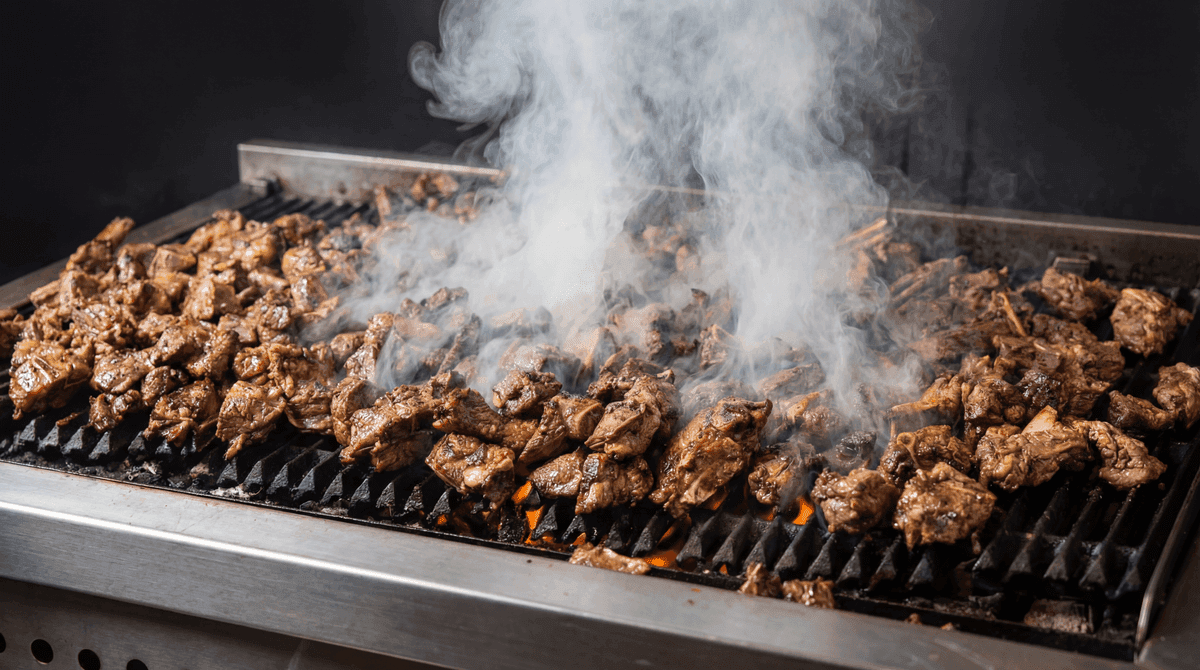
Large cuts are placed directly on the grill, about 6 inches above the coals. The griller constantly monitors temperature by feel, rotating meat every few minutes to ensure even cooking. Occasional flare-ups add char without burning. This process can take 45-90 minutes depending on cut size. Patience is non-negotiable.
Cutting and Serving
When perfectly cooked, the meat is removed and chopped with a large knife or machete on a wooden cutting board. Customers choose their preferred cuts — from fatty pieces to lean meat. It's served immediately on brown paper or in a bowl, with raw sliced onions and fresh baguette. The heat, smoke, and communal atmosphere are part of the experience.
Authentic Dibi in Maryland
At Koité Grill, we stay true to Senegalese Dibi traditions while adapting to modern food safety standards and Maryland's climate. Here's how we honor the art:
Our Process
- • Premium Halal lamb from trusted suppliers
- • Traditional charcoal grilling
- • Senegalese-trained grillmasters
- • Made-to-order, never pre-cooked
- • Authentic onion sauce (sauce oignon)
What Makes Ours Special
- • Same recipes used in Dakar
- • Grillmasters from Senegal
- • Natural wood charcoal
- • Family recipes passed down
- • Welcoming, authentic atmosphere
Our Dibi Menu
Dibi Lamb Platter
Charcoal-grilled lamb served with your choice of rice (Jollof, white, or broken rice), tangy onion sauce, and fresh vegetables. Our signature dish.
Most PopularDibi Beef
Tender beef grilled the traditional way. Leaner than lamb but equally flavorful. Great for those who prefer beef.
Lean OptionMixed Dibi Platter
Can't decide? Get both lamb and beef on one platter. Perfect for sharing or trying both styles.
Best ValueDibi Family Feast
Whole grilled lamb leg (serves 4-6). Perfect for celebrations, family gatherings, or special occasions. Order 24 hours in advance.
Special OrderHow to Eat Dibi Like a Senegalese Local
Step 1: The First Bite
Take a piece of grilled meat and dip it in the tangy onion sauce. This first bite should be savored — it's where you taste the smoke, the seasoning, and the meat quality.
Step 2: Balance the Flavors
Alternate between the rich, smoky meat and the fresh, acidic onions. The contrast is essential — the onions cut through the fat and refresh your palate.
Step 3: Use Your Bread
Tear off pieces of bread to scoop up meat, onions, and sauce together. In Senegal, this is often done with fresh baguette (tapalapa). The bread soaks up all the flavors.
Step 4: Share the Experience
Dibi tastes better when shared. Order a large platter, gather friends or family, and eat together. The communal aspect is as important as the food itself.
First Time Trying Dibi? Here's What to Know
It's not heavily spiced. If you're used to heavily seasoned BBQ, Dibi's simplicity might surprise you. That's the point — let the meat shine.
The onion sauce is key. Don't skip it! The tangy sauce balances the rich meat perfectly. Some find it spicy, but it's more about acidity.
Lamb is traditional. If you've never had lamb or are hesitant, try the mixed platter. Our lamb is mild and tender, not gamey.
Eat with your hands. While we provide utensils, Dibi is traditionally a hands-on experience. Get messy — it's part of the fun!
Pair it right. Traditional drinks include bissap (hibiscus tea) or baobab juice. Their tartness complements the rich grilled meat perfectly.
What Dibi Lovers Say
"As someone from Dakar, I was skeptical. But this is REAL Dibi — the same taste I grew up with. The grillmaster knows what he's doing. This is home for me."
"I've had BBQ from Texas to Korea, but Dibi is something entirely different. The simplicity lets you taste the quality of the meat and the skill of the griller. Mind-blowing and so tender!"
"I'd never tried African food before. The Dibi Lamb changed my whole perspective. The char, the smoke, the onion sauce — it all works together perfectly. I'm hooked!"
Experience Authentic Senegalese Dibi Today
Taste the tradition. Savor the smoke. Join us for Dibi done right.